What should you do if you get a letter from the IRS?
Author: David F. Gremillion, J.D. LL.M. (Taxation)
Few pieces of mail cause as much anxiety as a letter from the Internal Revenue Service.
But receiving an IRS notice does not necessarily mean that you are in serious trouble. The IRS sends millions of notices each year for everything from simple requests for information to proposed changes to a tax return to demands for payment of an outstanding tax liability.
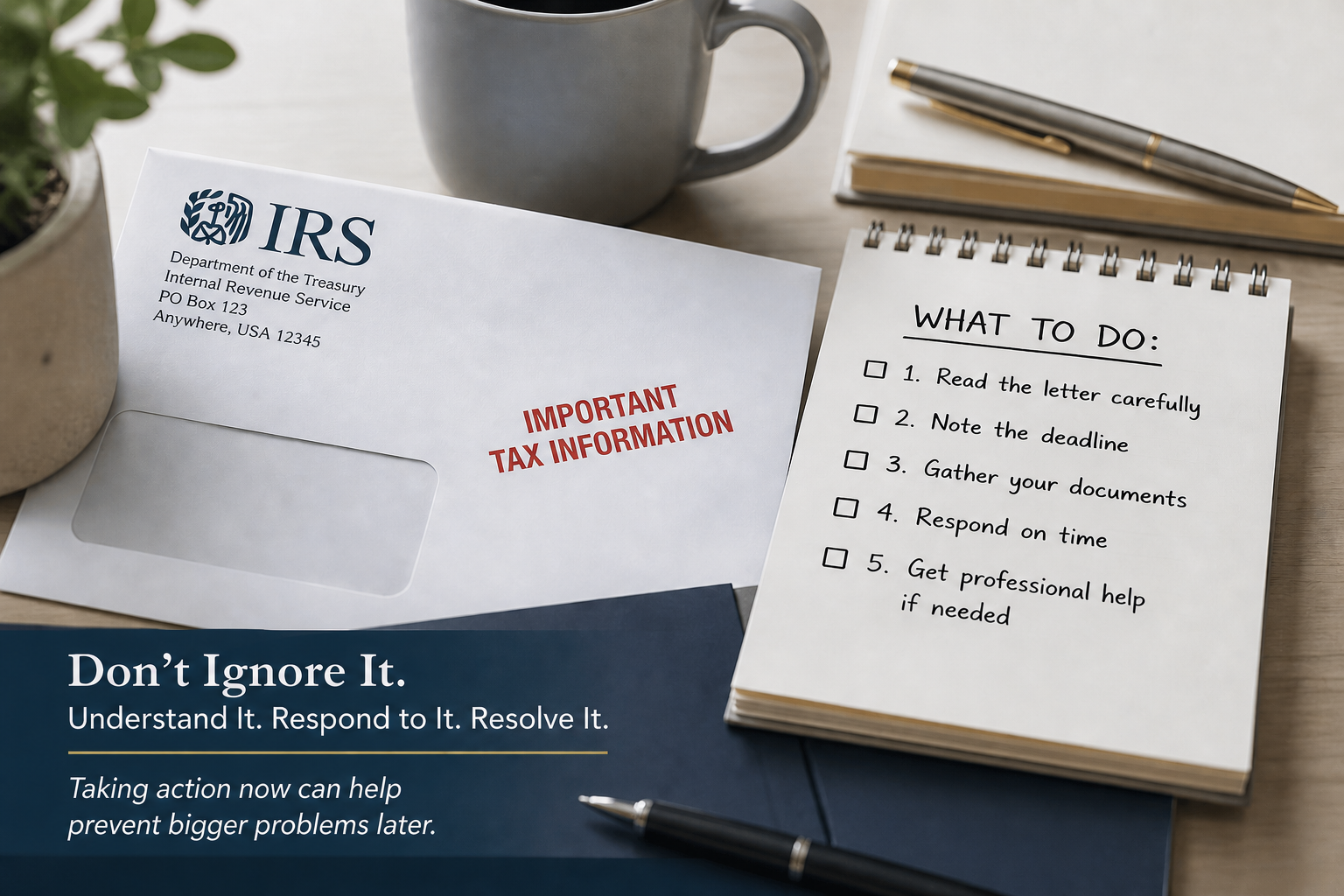
The most important thing you can do when you receive an IRS notice is not ignore it!
An IRS notice usually contains a deadline and missing that deadline can significantly affect your rights and your options. Depending on the type of notice, you may have the opportunity to dispute the IRS’s positions, request an appeal, establish a payment plan, submit an offer in compromise, or pursue another resolution.
Step 1: Don’t panic but don’t put the letter in a drawer to be forgotten!
First, determine exactly what you received. Look for the notice or letter number, usually identified by a code such as CP14, CP2000, CP501, CP504, LT11, or Letter 1058. The notice number can tell you a great deal about where you are in the IRS process.
Read the entire notice, paying particular attention to:
· The tax year involved
· The amount the IRS says you owe
· The reason for the notice
· The response deadline
· Any proposed changes to your return
· Instructions for disputing the IRS’s position
· Instructions for paying or establishing a payment plan
· Any language concerning a lien, levy, or collection action
Step 2: Determine what kind of IRS notice you received.
Not every IRS notice means the same thing. An IRS letter may be:
· A request for information
· A proposed change to your tax return
· A notice that you owe an assessed tax balance
· A collection warning
· A notice concerning a lien or levy
· A formal notice that triggers appeal or Tax Court rights.
Some common IRS notices and what they mean.
1. CP14- You have a balance due
IRS initial notice that you may owe a balance of tax. The notice typically identifies the amount due and provides instructions for payment.
If you agree and can afford to pay it, paying the balance promptly can prevent additional interest and penalties from accruing.
2.CP2000- Income doesn’t match your return
Generally, a CP2000 is sent when information reported to the IRS by a third party does not appear to match what was reported on your tax return. The IRS is proposing an adjustment based on the information it has. You should carefully compare the notice with your tax return and the underlying records.
3. CP501- Reminder of an unpaid balance
This is a reminder that the IRS believes you have an unpaid balance. If you receive this notice, check your records carefully. Did you pay already? Was the payment credited to the correct tax year? Is the balance actually correct?
4. CP 503- The IRS says you still haven’t paid
This is generally a more serious follow-up collection notice. The IRS is continuing to pursue an unpaid balance and is warning you that additional collection activity may follow.
If you have not already addressed the liability, this is a good time to evaluate your options with a tax professional.
5. CP504- Final notice before levy
This letter is more serious.
The IRS may be warning that it intends to levy certain property or rights to property of the balance if not resolved. Do not treat this as a routine bill!
If you cannot pay the balance in full, you should immediately look into whether you qualify for a payment plan, an offer in compromise, currently not collectible status, or another collection alternative.
You should also determine whether you have appeal rights that need to be exercised before the deadline.
6. LT11/ Letter 1058- Notice of Intent to Levy
This is an important collection notice. The IRS is notifying you of its intent to levy and explaining your rights to request a Collection Due Process hearing.
A levy is different from a lien. A tax lien is generally the government’s legal claim against property as collateral for the debt.
A levy is actual seizure of property or rights to property. Depending on the circumstances, a levy can affect wages, bank accounts, and other assets.
If you receive this letter, pay close attention to the deadline in the notice. In many cases, a timely CDP request can allow you to bring the matter before the IRS Independent Office of Appeals and preserve your rights.
What if you agree that you owe the money but can’t pay?
This is a common situation! The inability to pay the entire balance immediately does not necessarily mean there is no solution.
Don’t assume that you have to come up with the entire amount immediately. Depending on your circumstances, you may be able to establish a payment plan, request currently not collectible status, or potentially pursue an offer in compromise. The appropriate option depends on your income, assets, expenses, the amount owed, and other circumstances.
Deadlines Matter!
One of the most important concepts in IRS collection matters is Collection Due Process, commonly called CDP.
When the IRS takes certain collection actions- such as issuing a notice of intent to levy- it may provide the taxpayer with an opportunity to request a CDP hearing before the IRS Independent Office of Appeals. A timely request generally must be made by the deadline in the notice, often within 30 days.
At a CDP hearing, taxpayers may be able to propose collection alternatives such as:
· A payment plan
· An offer in compromise
· Currently not collectible status
· Other collection alternatives
A timely CDP request can also preserve important judicial review rights.
How can a Tax Attorney help?
Not every IRS notice requires an attorney. But professional advice can be particularly valuable when:
· The IRS is proposing a large adjustment
· You disagree with the IRS
· You received a Notice of Deficiency
· The IRS is threatening a levy
· You have received an LT11 or Letter 1058
· You owe substantial back taxes
· You have multiple years of unpaid taxes
· You have unfiled tax returns
· You own a business with payroll tax problems
· The IRS has filed or is threatening to file a federal tax lien
· You are considering an Offer in Compromise
· You have already attempted to resolve the matter with the IRS
· You have received multiple collection notices
· You are facing a deadline involving Tax Court or an appeal
The earlier you seek advice, the more options you may have!
What documents do you need before calling a Tax Attorney?
The IRS notices and letters you have received are among the most important.
If you are disputing a balance that you have already paid, proof of those payments made to the IRS.
An overview of your financial status, including bank account balances, retirement accounts, equity in any property you own and your monthly living expenses.
The biggest mistake: Doing nothing!
The worst response to an IRS notice is often putting it aside and hoping it goes away.
It usually won’t!
The IRS collection process can escalate from a balance due notice to a federal tax lien, and ultimately a levy. The good news is that taxpayers generally have rights and potential avenues for resolution.
The key is understanding the notice, what the deadlines are, and what options are available before the deadline expires.
Need help understanding your IRS notices? Call Jeffords Anthony PLLC to schedule a consultation.