1031 Exchange Tax Guide for Real Estate Investors: How a Like-Kind Exchange Can Help You Defer Capital Gains
Author: David F. Gremillion, J.D. LL.M. (Taxation)
If you own rental, commercial, or investment property anywhere in the United States, a 1031 exchange may be one of the most powerful tools available to you for deferring capital gains and depreciation recapture when you sell.
Our tax and business law firm, with offices in Mandeville, Louisiana and Ridgeland, Mississippi, regularly advises real estate investors locally and across the country on Section 1031 planning, IRS enforcement, and how exchanges fit into broader tax and estate strategies.
This guide walks through the essentials so you can decide whether a 1031 exchange belongs in your plan, and what to do if the IRS scrutinizes your exchange.
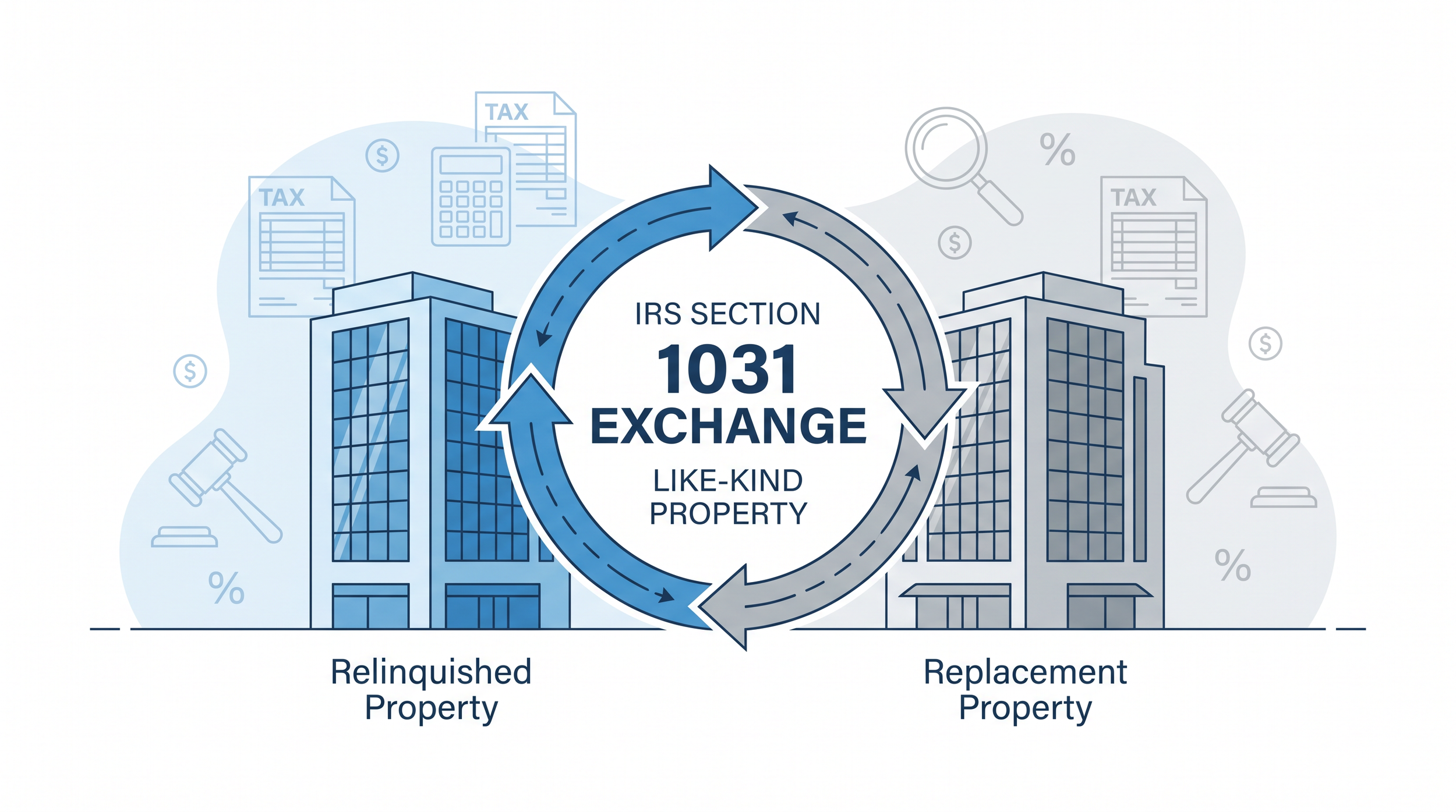
What Is a 1031 Exchange?
A 1031 exchange comes from Internal Revenue Code Section 1031. In simple terms, it allows you to:
- Sell real property held for productive use in a trade or business or for investment, and
- Reinvest the proceeds into other “like-kind” real property,
- Without immediately recognizing gain or loss on that sale.
Think of it as trading properties and rolling your gain forward, instead of triggering a taxable event every time you reposition your portfolio. When properly structured, a 1031 exchange can defer:
- Federal capital gains tax
- State income tax in many jurisdictions
- Net investment income tax
- Depreciation recapture
Important: It is a deferral, not a permanent elimination. Your basis and deferred gain carry over into the new property and will matter for future sales or your estate planning.
Since the Tax Cuts and Jobs Act of 2017, Section 1031 applies only to exchanges of “real property”—no more tax-deferred swaps of equipment, vehicles, or other personal property.
You must report the transaction to the IRS on Form 8824, Like-Kind Exchanges, filed with your tax return for the year in which the exchange occurs.
Who Typically Uses 1031 Exchanges?
We see 1031 exchanges used by:
- Small and mid-size landlords with rental houses, duplexes, or small multifamily buildings.
- Owners of office, retail, or mixed-use properties looking to trade up or reduce management headaches.
- Investors holding long-term land or older commercial sites in appreciating markets.
- Business owners who own the real estate where their business operates and want to restructure or relocate.
In our Mandeville and Ridgeland offices, we frequently help:
- Northshore and metro New Orleans clients exchange older rentals for newer, better-located properties.
- Jackson/Ridgeland/Madison clients trade legacy properties into more diversified or passive investments.
The same principles apply if your properties are in Dallas, Denver, Atlanta, Phoenix, or any other market in the U.S.
Core 1031 Rules You Need to Know
The federal rules are the same no matter where your property is located. You still need to consider state tax consequences and local market realities, but the key Section 1031 requirements are:
1. The Property Must Be Held for Business or Investment
Both the property you sell (the relinquished property) and the property you buy (the replacement property) must be held for:
- Productive use in a trade or business, or
- Investment purposes.
This generally includes:
- Long-term rental houses, duplexes, and multifamily buildings
- Office, retail, and industrial properties
- Land held for long-term investment
It generally does not include:
- Your primary residence
- Vacation homes used primarily for personal enjoyment
- Properties held primarily for quick resale or flipping
The IRS and courts look at your intent, holding period, and facts and circumstances to distinguish true investment/business property from personal or dealer property.
2. It Must Be “Like-Kind” Real Property
Section 1031 now applies only to real property, and within that category “like-kind” is interpreted broadly. You do not have to exchange a duplex for another duplex.
Common “like-kind” exchanges include:
- Vacant land for an apartment building
- A rental four-plex for a retail strip center
- A single-family rental for a small office building
- Direct ownership for certain co-ownership structures (such as tenants-in-common or certain trust interests) that are treated as real property interests
However, certain assets are specifically excluded, including:
- Partnership or LLC membership interests
- Corporate stock
- Certain other securities and rights
You are exchanging real property for real property—not entity interests or financial products.
3. Using a Qualified Intermediary (QI)
In a typical delayed 1031 exchange, you cannot receive the sale proceeds yourself. If you have actual or constructive receipt of the funds, the IRS will treat the transaction as a taxable sale rather than a like-kind exchange.
To avoid this, most taxpayers use a Qualified Intermediary (QI):
- The buyer’s money goes directly to the QI at closing.
- The QI holds the funds during the identification and exchange periods.
- When you purchase replacement property, the QI wires the funds directly into that closing.
In rare simultaneous two-party swaps, a QI may not be strictly necessary. But in practice, for the modern delayed exchanges that most real estate investors use, working with a reputable QI (and having counsel review the exchange agreement) is essential to preserve the tax-deferred status.
4. Deadlines: 45 Days and 180 Days
Section 1031 imposes two strict deadlines:
- 45 Day Identification Period
Beginning when you transfer the relinquished property, you have 45 calendar days to identify potential replacement property in writing. The IRS has specific rules on how many properties you can identify and under what valuation limits (the three-property rule, 200% rule, or 95% rule).
- 180 Day Exchange Period
You must acquire the replacement property and complete the exchange no later than 180 days after the date you transfer the relinquished property or by the due date (including extensions) of your tax return for that year—whichever comes first.
These two periods run at the same time, starting on the date of transfer. If you miss either deadline, the exchange will almost always fail, and the sale becomes fully taxable.
Planning your replacement property strategy before you ever list the property for sale or sign a contract is crucial.
5. Equal or Greater Value and Reinvestment of Proceeds
To fully defer tax in a 1031 exchange, you generally need to:
- Purchase replacement property of equal or greater value than the property you sold.
- Reinvest all net equity (no cash “cashed out” at closing).
- Replace equal or greater debt (or add cash to offset any reduction in debt).
If you receive cash or non-like-kind property (known as boot), you will recognize gain to the extent of that boot. You can still complete an exchange, but you will have a partial deferral and partial current tax.
A good tax analysis upfront can help you decide whether full deferral, partial deferral, or no exchange is best in light of your goals.
A Practical Example (Using Local Properties)
Imagine a long-term investor who bought a small retail center in Covington, Louisiana years ago for 400,000. It is now worth 1,000,000. A straight sale would likely trigger:
- Federal capital gains tax on the 600,000 gain
- Depreciation recapture on prior deductions
- Louisiana state income tax, and potentially Mississippi implications depending on residence and where other properties are located
Instead, the investor:
1. Meets with a tax attorney and engages a QI before listing the property or signing a sale contract.
2. Sells the Covington center; the QI receives the entire 1,000,000 at closing.
3. Within 45 days, properly identifies:
- A newer retail center in Mandeville, and
- A small multifamily building in metro New Orleans.
4. Closes on the Mandeville center within 180 days, reinvesting all proceeds and replacing the existing debt appropriately.
Result:
- The gain and depreciation recapture are deferred, not eliminated.
- The basis from the old property carries forward into the new property.
- The investor has upgraded both location and cash flow without an immediate tax bill.
The same pattern can apply if you’re exchanging from a Ridgeland triplex into a Madison office condo, or from an older Dallas rental into a newer Phoenix asset. The federal mechanics are the same; what changes is the state tax overlay and the local market.
Common Mistakes That Can Cost You
1031 exchanges attract IRS attention, especially in higher-dollar and partnership/LLC contexts. Common pitfalls include:
1. Waiting Too Long to Plan
Starting the process after you’ve already signed a contract or closed on a sale is often too late.
- You need the QI and exchange language in place before closing.
- You need a realistic plan for replacement property so you don’t burn most of the 45-day identification period just getting organized.
2. Missing the 45-Day or 180-Day Deadlines
The deadlines are hard. If you:
- Fail to identify replacement property by day 45, or
- Fail to close on replacement property by day 180 (or your earlier return due date),
the exchange typically fails, and the sale is fully taxable. There is no general “reasonable cause” relief for these timing rules.
3. Using Personal-Use or Dealer Property
Trying to jam a primary residence, vacation home, or quick flip into a 1031 exchange is risky.
- The IRS can argue the property was never truly held for investment or business use.
- Documentation of rental activity, marketing, and holding period is critical.
Where personal and investment uses overlap (for example, a vacation rental you also use) the facts must be carefully analyzed.
4. Improper Control of Funds
Routing proceeds to your operating account, borrowing against exchange funds, or having contractual rights to direct or access the money can create actual or constructive receipt and blow the exchange.
Proper exchange agreements and clean fund flows through the QI are non-negotiable.
5. Complex Partnership/LLC “Drop-and-Swap” Moves
Distributing property out of a partnership or LLC to individual owners shortly before a sale so they can each do their own exchanges raises thorny issues, including:
- The step-transaction doctrine, where the IRS collapses several steps into one taxable sale.
- The “same taxpayer” rule, requiring consistency between the taxpayer disposing of property and the taxpayer acquiring replacement property.
- The statutory exclusion of partnership interests from 1031 treatment.
These strategies can be viable in some cases but require careful, time-sensitive planning—often years, not months—before any contemplated sale.
6. Related-Party Transactions
Special rules apply when related parties are involved, and the IRS is wary of basis-shifting or circular transactions.
- Exchanges between related parties generally require both parties to hold their replacement property for at least two years after the exchange.
- Structures designed primarily to sidestep these related-party rules can be challenged and disallowed.
If a family member, controlled entity, or other related party is on either side of the transaction, the structure needs extra scrutiny.
IRS Enforcement, Audits, and How We Can Represent You
Because 1031 exchanges provide a significant tax benefit, the IRS actively monitors and enforces compliance with Section 1031. Any return that includes an exchange is potentially subject to:
- Examination (audit) at the IRS Exam level
- Review and negotiation in the IRS Independent Office of Appeals
- Litigation in U.S. Tax Court or federal district court, if necessary
During an audit of a 1031 exchange, the IRS will typically review:
- Purchase and sale contracts, closing statements, and deeds
- The Qualified Intermediary agreement and movement of funds
- Identification letters and timing of replacement property
- Basis calculations, depreciation schedules, and Form 8824 reporting
If the IRS determines that an exchange does not meet the requirements—because of timing issues, improper property use, constructive receipt of funds, related-party concerns, or other problems—it can:
- Disallow the tax deferral and treat the sale as taxable
- Assess capital gains and depreciation recapture
- Add penalties and interest if it believes the underpayment was due to negligence or other issues
As tax attorneys, we are specifically authorized to represent taxpayers in:
- IRS examinations (audits) – We can handle communications with Revenue Agents, help you respond to Information Document Requests (IDRs), and present legal and factual arguments supporting your exchange.
- IRS Independent Office of Appeals – Attorneys, CPAs, and enrolled agents may represent taxpayers before Appeals, the level of appeal within the IRS where you can challenge proposed adjustments and negotiate resolutions.
- U.S. Tax Court – If you receive a Notice of Deficiency and wish to challenge it in Tax Court, we can prepare the petition, build the evidentiary record, and litigate the 1031 issues as part of your broader tax case.
Because Section 1031 is federal law, we can represent taxpayers in IRS audits, appeals, and Tax Court matters regardless of where they live or where the property is located, while coordinating with local counsel as needed for state-specific issues.
How 1031 Exchanges Fit Into Big-Picture Planning
A 1031 exchange is rarely just about this year’s tax bill. It is a tool that can be integrated into:
- Long-term portfolio building – Trading out of older or management-intensive properties into newer, more efficient, or better-located assets.
- Risk management and diversification – Moving from a single large asset into multiple smaller properties, or vice versa.
- Retirement and succession planning – Coordinating exchanges with entity structures and estate plans, with an eye toward eventual step-up in basis for heirs.
Because Section 1031 is federal tax law, the same core rules apply regardless of state. But the state tax overlay, entity structure, and estate plan can materially change the optimal strategy.
When to Talk to a Tax Attorney
The most expensive 1031 mistakes typically happen before anyone talks to a tax attorney.
If you are considering a sale of investment or business real estate—whether in Louisiana, Mississippi, or elsewhere in the United States—it’s worth asking:
- Does a 1031 exchange make sense for my situation?
- What are my true net tax consequences with and without an exchange?
- How does an exchange interact with my LLC/partnership structure and estate plan?
- What happens if the IRS questions or audits my exchange?
Our firm advises clients on:
- Whether particular properties qualify for Section 1031 treatment.
- How to structure exchanges involving LLCs, partnerships, and multi-owner arrangements.
- Coordinating federal exchange rules with Louisiana and Mississippi tax law and other states where you own property.
- Representing clients in IRS exams, Appeals, and Tax Court when 1031 treatment or other real-estate tax issues are under challenge.
Because these issues involve federal tax law, we routinely represent clients before the IRS and advise on exchanges involving properties in multiple states, regardless of where the client lives.
Before you list your property, sign a contract, or respond to an IRS notice, schedule a consultation. A short planning conversation now can save you a large, avoidable tax bill later—and put you in a position to use 1031 exchanges strategically, not reactively, with a clear plan for both planning and defense.